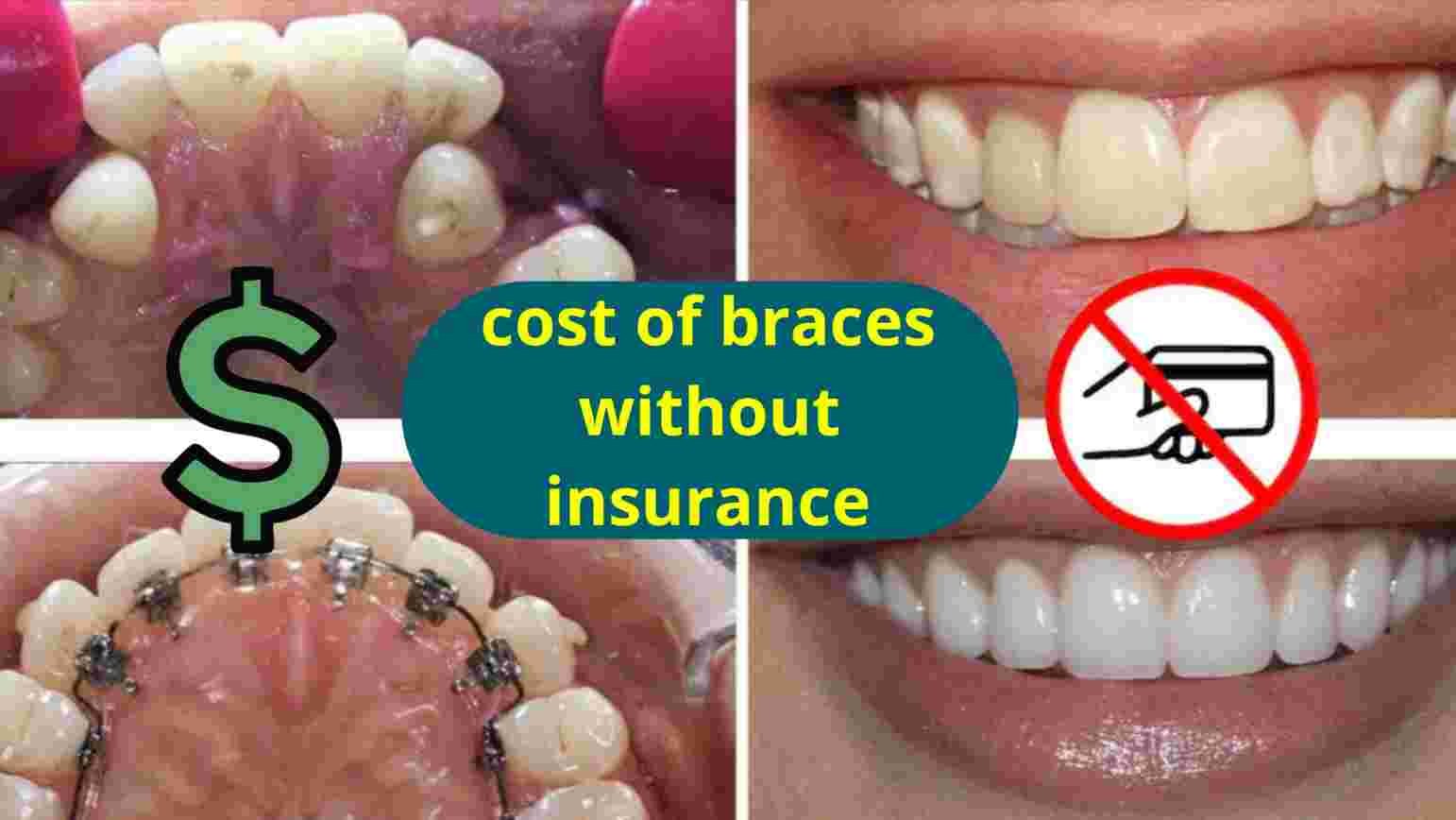
The Unfiltered Truth: How Much Do Braces Really Cost Without Insurance?
When you look in the mirror, what do you see? For many, a smile is the first thing people notice. It is a signature of confidence, a social bridge, and a vital part of your overall health. But when your teeth aren’t quite lining up the way they should, that confidence can take a hit. You start thinking about braces. Then, reality sets in: you don’t have orthodontic insurance coverage.
The immediate question that follows isn’t just “How long will this take?” but “How much is this going to set me back?”
If you are navigating the world of orthodontics out-of-pocket, you are not alone. Millions of Americans seek treatment every year without the safety net of a dental plan. This guide is designed to be your definitive resource, breaking down every penny, every hidden fee, and every strategy to make a straight smile affordable.
The Baseline: What Is the Average National Cost?
Before we dive into the weeds of specialized hardware and regional price hikes, let’s look at the “sticker price.” On average, in the United States, orthodontic treatment for an adult or child without insurance ranges from $3,000 to $10,000.
Now, that is a massive window. Why the gap? It’s because “braces” isn’t a single product; it’s a medical service tailored to your specific jaw structure. A teenager needing a minor adjustment will pay significantly less than an adult requiring jaw realignment and three years of hardware.
Quick Breakdown by Type (Estimated):
- Traditional Metal Braces: $3,000 – $7,000
- Ceramic Braces: $4,000 – $8,000
- Lingual Braces (Behind the teeth): $8,000 – $10,000
- Clear Aligners (Invisalign, etc.): $3,000 – $8,000
1. Traditional Metal Braces: The Reliable Workhorse
When you think of braces, you probably picture the classic “train tracks.” Metal braces have been around for decades for a reason: they work. They are made of high-grade stainless steel and are the most effective way to treat complex overcrowding or severe bite issues.
Why the Cost Varies
Without insurance, you are paying for the physical materials (brackets and wires) and the orthodontist’s time. Because metal braces require manual adjustments every 4 to 8 weeks, a significant portion of your bill goes toward those office visits.
- Pros: Usually the most affordable; fastest results for severe cases.
- Cons: Highly visible; can be uncomfortable initially.
2. Ceramic Braces: The Aesthetic Alternative
Often called “clear braces,” these function exactly like metal ones but use tooth-colored or transparent ceramic brackets. They blend in with your teeth, making them a popular choice for adults and older teens who are self-conscious about their appearance.
The “Invisibility” Tax
Expect to pay about $1,000 to $2,000 more for ceramic than you would for metal. Ceramic is a more fragile material than steel. The brackets are larger and can sometimes cause more friction, meaning treatment might take a few months longer. You are essentially paying a premium for aesthetics.
3. Lingual Braces: The Hidden Luxury
If you want the power of fixed braces with zero visibility, lingual braces are the answer. They are attached to the back (tongue side) of your teeth.
Why are they so expensive?
Without insurance, lingual braces can easily cross the $10,000 mark. The reason is twofold:
- Customization: Each bracket must be custom-made to fit the unique contours of the back of your teeth.
- Expertise: Not every orthodontist is trained to apply lingual braces. The adjustments are more difficult and time-consuming for the doctor, and those specialized labor costs are passed on to you.
4. Clear Aligners (Invisalign and Competitors)
Clear aligners have revolutionized the industry. Instead of brackets, you wear a series of plastic trays that gradually shift your teeth.
The Cost Factor
For a long time, Invisalign was the most expensive option. However, with more competition in the market, prices have stabilized. If your case is “mild to moderate,” you might find that aligners cost roughly the same as traditional metal braces ($3,000 – $5,000). If your case is complex, the number of trays increases, and so does the price.
A Note on Direct-to-Consumer Aligners: You’ve likely seen ads for companies like Byte or SmileDirectClub. These can cost as little as $1,800 to $2,500. While tempting, remember that you aren’t seeing a doctor in person. For many, the lack of professional supervision can lead to further dental issues down the road, which might end up costing more than the original braces would have.
5. Critical Factors That Influence Your Bill
When you get your quote, it isn’t just a random number. Several variables dictate why your neighbor paid $4,000 while you are being quoted $7,000.
A. The Complexity of the Case
This is the biggest driver. Do you have a simple gap? Or do you have an impacted canine, a deep overbite, and a narrow palate? The more work required to move teeth and bone, the more you pay.
B. Treatment Duration
Time is money. Every time you sit in that chair, you are paying for the orthodontist’s expertise, the assistants’ time, and the facility’s overhead. A 12-month plan is drastically cheaper than a 36-month plan.
C. Geography (The Zip Code Factor)
Just like rent, orthodontic costs vary by location. An orthodontist in New York City or San Francisco has much higher overhead (rent, taxes, labor) than one in rural Ohio.
- High-Cost Areas: $6,000 – $11,000
- Lower-Cost Areas: $3,000 – $6,000
D. The Age of the Patient
Generally, it is cheaper to straighten a child’s teeth. Why? Because their jaw is still growing, making it easier to manipulate. Adults have denser bone structures, often requiring more force, specialized hardware, or even surgery, which drives the price up.
6. The “Hidden” Costs You Need to Budget For
The quote you get in the consultation isn’t always the “all-in” price. Make sure to ask if the following are included:
- Consultation Fee: Some offices offer this for free; others charge between $100 and $200.
- X-Rays and 3D Imaging: These are essential for planning. If not included, they can add $200–$500 to the start-up cost.
- Emergency Appointments: If you break a wire or pop a bracket eating a bagel, does the office charge for the fix?
- The Retainer: This is the most forgotten cost. Once the braces come off, you must wear a retainer to keep your teeth in place. A set can cost $300–$600. Some offices include the first set; others don’t.
- Professional Cleanings: While wearing braces, you might need more frequent cleanings from your general dentist to prevent “white spots” or decay.
7. How to Afford Braces Without Insurance: 8 Pro Strategies
Don’t let the lack of insurance stop you. There are several ways to make this manageable.
1. In-House Financing (The Interest-Free Plan)
Most orthodontists are basically small-business owners who understand that $6,000 is a lot of money. The majority offer interest-free payment plans. You pay a down payment (usually $500 – $1,500) and then monthly installments over the course of your treatment.
2. Dental Schools
If you live near a university with a dental school, you can save 30% to 50%. The work is done by students specializing in orthodontics, but they are closely supervised by veteran professors. The downside? Appointments take much longer, and the waitlist can be months or even years.
3. FSA and HSA Accounts
If you have a Flexible Spending Account (FSA) or a Health Savings Account (HSA) through your employer, you can use those pre-tax dollars to pay for braces. This can save you about 20-30% depending on your tax bracket.
4. Third-Party Financing (CareCredit)
Services like CareCredit or Proceed Finance offer loans specifically for medical procedures. Be careful with these; while they often offer “0% interest for 12 months,” the interest rates skyrocket if you don’t pay it off within that window.
5. The “Full Payment” Discount
If you have the cash on hand, ask for a “Paid in Full” discount. Many offices will shave 5% to 10% off the total bill if they don’t have to chase you for monthly payments.
6. Shop Around (But Don’t Just Buy the Cheapest)
Get at least three consultations. You will be surprised at the variance in pricing and treatment philosophies. However, remember that you are buying a medical outcome, not a commodity. The cheapest doctor isn’t always the best one.
7. Non-Profits and Charities
For families with low income, organizations like Smiles Change Lives or Smile for a Lifetime provide orthodontic treatment to children who otherwise couldn’t afford it. There are strict income requirements and a small application fee, but it can be a lifesaver.
8. Negotiation
It sounds strange to negotiate with a doctor, but it is common. If one doctor quotes you $5,000 and another quotes $5,500 for the same plan, show the second doctor the first quote. They may match it to get your business.
8. Is the Investment Worth It?
When you are looking at a $5,000 bill, it is easy to think, “Maybe my teeth aren’t that bad.” But the cost of not getting braces can be higher in the long run.
- Oral Health: Crooked teeth are harder to clean. This leads to plaque buildup, gum disease, and eventually tooth loss.
- Jaw Issues: Misaligned bites cause TMJ (jaw pain), headaches, and even digestive issues because you can’t chew food properly.
- Psychological Impact: Multiple studies show that people with straight teeth are perceived as more successful, more trustworthy, and more attractive in professional settings. The “smile boost” to your self-esteem is often priceless.
9. Frequently Asked Questions (FAQ)
Q: Can I get insurance just for braces right before I start?
A: Technically, yes, but most dental insurance plans have a “waiting period” (often 6-12 months) for orthodontic work. Additionally, most individual plans have a lifetime maximum of $1,000 to $2,000, which barely scratches the surface of the total cost.
Q: Are braces cheaper for adults than kids?
A: No, usually the opposite. Adult treatment often takes longer and requires more complex hardware, making it more expensive.
Q: Do I really need the expensive retainer?
A: Yes. Without a retainer, your teeth will shift back to their original position within months. If you skip the retainer, you are essentially throwing your $5,000 investment in the trash.
Q: Is Invisalign really faster than metal braces?
A: It depends on the case. For simple spacing, aligners can be faster. for complex bite rotations, metal braces are much more efficient.
Advice from xyzhelp.com
Navigating orthodontic costs without insurance can feel like an uphill battle, but it is one you can absolutely win with the right strategy. At xyzhelp.com, we believe that financial barriers shouldn’t dictate your health or your happiness.
Our primary advice is this: Prioritize the “In-House” payment plan. Most orthodontists are willing to work with you because they want to help patients. Avoid high-interest credit cards at all costs, as the interest will quickly nullify any savings you found.
Secondly, don’t cut corners on quality. Your teeth are with you for life. Spending an extra $500 for a reputable, board-certified orthodontist is far better than paying $2,000 for a “quick fix” that results in root damage or a collapsed bite.
Take your time, get multiple quotes, and use your HSA/FSA dollars wisely. A straighter, healthier smile is a marathon, not a sprint. You’ve got this!
Disclaimer: The prices mentioned in this article are estimates based on national averages. Always consult with a licensed orthodontist for a personalized quote based on your specific needs.
