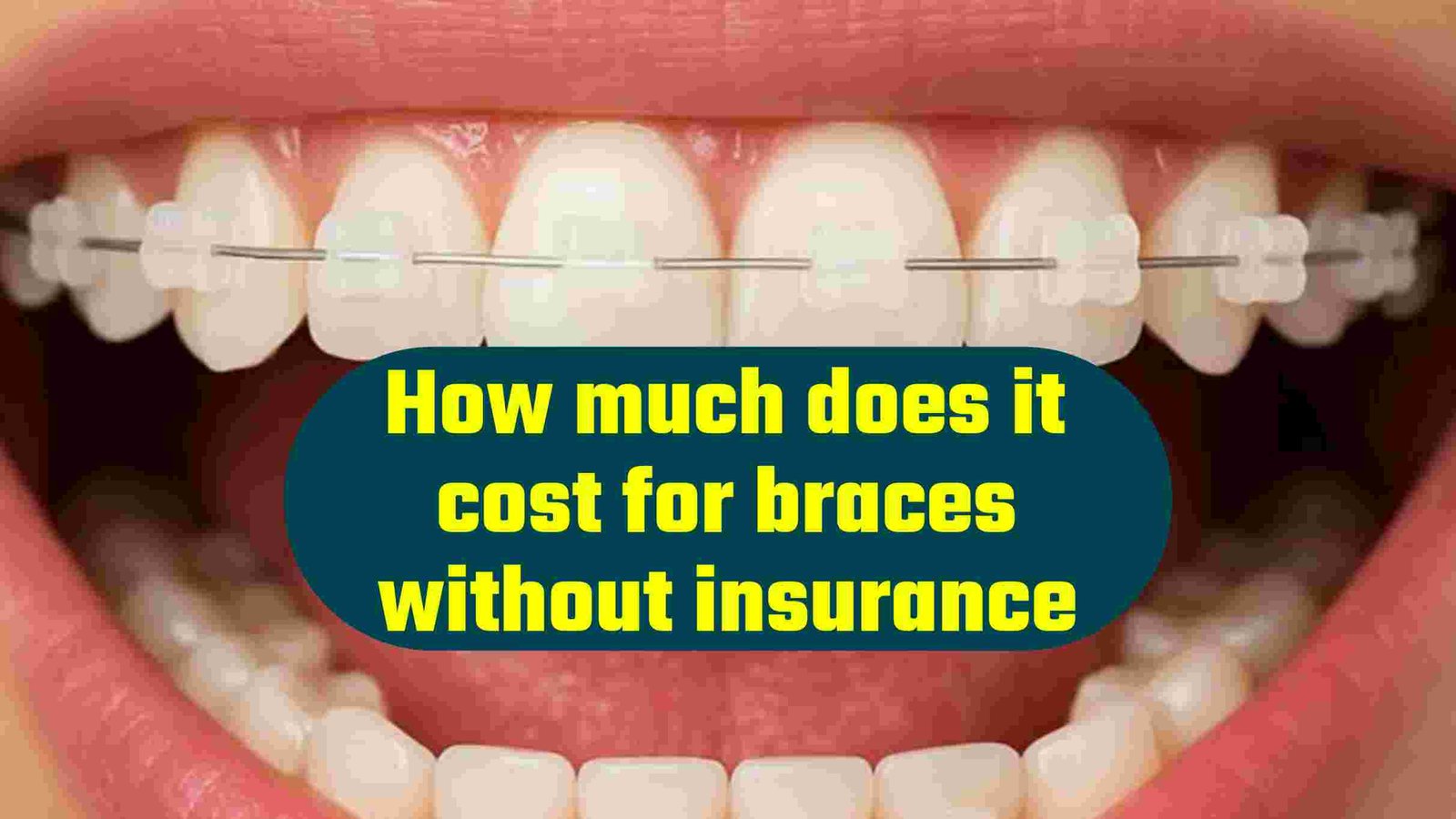
The Real Cost of a Perfect Smile: A Deep Dive into Braces Without Insurance
So, you’ve finally decided to take the plunge. You’ve looked in the mirror, noticed that one stubborn tooth that refuses to stay in line, or perhaps you’re dealing with a complex bite issue that’s causing more than just aesthetic concerns. You want braces. But then, the reality of the American healthcare system hits you: you don’t have orthodontic insurance coverage.
The first question that likely popped into your head—right after “Will it hurt?”—is “How much is this going to set me back?”
In the United States, orthodontic care is often viewed as a luxury, yet for many, it is a functional necessity. Navigating the world of brackets, wires, and clear aligners without a safety net of insurance can feel like walking through a financial minefield. This guide is designed to be your map. We are going to break down every single penny, explore the hidden costs, compare different types of treatments, and show you exactly how people manage to afford that “million-dollar smile” without actually spending a million dollars.
1. The Baseline: What Are the Average Costs?
When you ask an orthodontist for a price quote, you’ll rarely get a single number. Prices are dynamic and highly personalized. However, for a standard 18-to-24-month treatment plan in the U.S., here are the national averages for patients paying entirely out-of-pocket:
- Traditional Metal Braces: $3,000 – $7,500
- Ceramic Braces: $4,000 – $8,500
- Lingual Braces (Behind the teeth): $8,000 – $13,000
- Invisalign or Clear Aligners: $3,000 – $8,000
These figures represent the total “all-in” cost for most standard cases. But as we all know, very few cases are “standard.” If you have a severe overbite, impacted teeth, or need jaw surgery in conjunction with braces, those numbers can easily climb higher.
2. Why Does the Price Vary So Much?
If you visit three different orthodontists in three different neighborhoods, you will get three different quotes. This isn’t because they are trying to trick you; it’s because several objective factors dictate the pricing.
Geographic Location
In the U.S., the cost of living directly correlates with the cost of dental work. If you are seeking treatment in Manhattan, San Francisco, or Beverly Hills, expect to pay at the higher end of the spectrum. The orthodontist’s overhead—rent, staff salaries, and taxes—is significantly higher in urban hubs. Conversely, a practitioner in rural Ohio or Texas might offer the same treatment for $1,500 less because their operational costs are lower.
Complexity of the Case
Braces aren’t just about straightening teeth; they are about correcting the “occlusion” (how your upper and lower teeth meet).
- Class I Malocclusion: Just some crowding or spacing. These are the cheapest to fix.
- Class II & III Malocclusion: Serious overbites or underbites. These require more time, more rubber bands, and more frequent adjustments, driving up the labor cost.
Duration of Treatment
Most people assume they’ll wear braces for two years. However, some might only need them for 12 months, while others might require 36 months. Since you are essentially paying for the orthodontist’s time and expertise at every monthly “adjustment” visit, a longer timeline means a higher bill.
Age of the Patient
Generally, pediatric orthodontics can be slightly cheaper because a child’s jaw is still growing, making it easier to move teeth. Adult bones are denser and the jaw is fused, often requiring more sophisticated techniques or longer treatment times to achieve the same result.
3. Breaking Down the Types of Braces
Choosing the right type of braces is a balance between your budget and your lifestyle. Let’s look at the details of each option.
Traditional Metal Braces ($3,000 – $7,000)
These are the “train tracks” we all remember. Made of high-grade stainless steel, they are the most durable and often the most effective for complex cases.
- Pros: Most affordable; fastest at closing large gaps; customizable with colored bands.
- Cons: Most noticeable; can cause irritation to cheeks; dietary restrictions (no popcorn or sticky candy).
Ceramic Braces ($4,000 – $8,000)
Similar in shape and size to metal braces, but the brackets are made of a clear or tooth-colored ceramic material.
- Pros: Much less visible than metal; great for professionals who want a discreet look.
- Cons: More expensive than metal; brackets are more brittle and can break easier; the clear ties can stain if you drink a lot of coffee or red wine.
Lingual Braces ($8,000 – $13,000)
These are placed on the inside (tongue side) of your teeth. They are virtually invisible from the outside.
- Pros: Completely hidden.
- Cons: Most expensive; extremely difficult to clean; can significantly affect speech (lisp) for the first few weeks; not every orthodontist is trained to apply them.
Clear Aligners / Invisalign ($3,000 – $8,000)
A series of custom-made, plastic trays that you swap out every week or two.
- Pros: Removable; no dietary restrictions; nearly invisible; comfortable.
- Cons: Requires extreme discipline (must be worn 22 hours a day); can be lost or broken; not always suitable for very complex tooth rotations.
4. The “Hidden” Costs You Haven’t Considered
The quote you get during your consultation is rarely the only money you will spend. When budgeting without insurance, you must account for these “stealth” expenses:
The Consultation and X-Rays
Some offices offer “Free Consultations,” but others charge between $100 and $300. You will also need a “Full Records” appointment which includes:
- Panoramic X-rays: ~$150 – $250
- Cephalometric X-ray: ~$150
- Digital Scans or Impressions: ~$100 – $200
Dental Work Pre-Braces
Your orthodontist will not put braces on unhealthy teeth. You might need:
- Deep Cleaning: $200 – $500
- Cavity Fillings: $150 – $300 per tooth
- Extractions: $200 – $400 per tooth
- Wisdom Tooth Removal: $1,500 – $3,000
5. Navigating Life Without Insurance: How to Save
Paying $6,000 out of pocket sounds impossible for the average American household. However, the orthodontic industry is built on financing. Here is how you can slash those costs.
In-House Financing (The 0% Interest Secret)
Almost every orthodontist in the U.S. offers in-house financing. Usually, it works like this:
- Down Payment: $500 – $1,500 (due the day the braces go on).
- Monthly Payments: $150 – $350 per month for the duration of the treatment.
Third-Party Lending (CareCredit)
If you can’t afford the down payment, many offices work with companies like CareCredit or Proceed Finance.
6. Comparing Mail-Order Aligners vs. Professional Orthodontics
In recent years, companies like Byte and AlignerCo have flooded the market with kits for under $2,000.
While the price tag is tempting, there are major risks:
- No In-Person Supervision: You are taking your own molds.
- Bite Issues: These kits focus on the “social six” (front teeth).
- The Verdict: If you have any complexity, the $2,000 you spend there might be wasted when you eventually have to pay a professional to fix the mistakes.
7. The Geographic Breakdown: Where is it Cheapest?
- Expensive States: New York, California, Massachusetts. (Average: $6,500+)
- Moderate States: Florida, Illinois, Virginia. (Average: $5,500)
- More Affordable States: Mississippi, West Virginia, Arkansas. (Average: $3,500 – $4,500)
8. Is It Worth It? The Cost of Inaction
Crooked teeth lead to:
- Periodontal Disease: Gum disease treatment can cost thousands.
- Tooth Decay: Fillings, crowns, and root canals are expensive.
- Bone Loss: Receding jawbone.
9. Comprehensive Treatment Comparison (Numbered Format)
Choosing between different orthodontic methods requires a deep look at the numbers and the lifestyle impact. Here is a detailed breakdown of the four primary options available in the United States today:
1. Traditional Metal Braces
- Average Out-of-Pocket Cost: $3,000 to $7,000.
- Typical Treatment Duration: 18 to 36 months depending on severity.
- Visual Impact: High visibility; silver brackets and wires are prominent.
- Comfort Level: Moderate; initial soreness and potential for wire pokes in cheeks.
- Best For: All cases, especially severe misalignments, rotations, and bite corrections.
- Maintenance: Daily brushing after every meal and using special flossing tools.
2. Ceramic (Clear) Braces
- Average Out-of-Pocket Cost: $4,000 to $8,000.
- Typical Treatment Duration: 18 to 36 months.
- Visual Impact: Low visibility; brackets blend in with tooth color, though wires are usually metal.
- Comfort Level: Moderate; brackets can be slightly larger and rougher than metal ones.
- Best For: Adults and teens who want the power of traditional braces with a more professional look.
- Maintenance: High; the clear ligatures (bands) can stain from dark foods and drinks.
3. Lingual Braces (Incognito)
- Average Out-of-Pocket Cost: $8,000 to $13,000.
- Typical Treatment Duration: 18 to 36 months.
- Visual Impact: Invisible; brackets are bonded to the back of the teeth.
- Comfort Level: Low initially; can cause tongue soreness and a temporary lisp.
- Best For: Professionals, celebrities, or anyone who absolutely refuses to show hardware.
- Maintenance: Very High; extremely difficult to see to clean properly.
4. Clear Aligners (Invisalign)
- Average Out-of-Pocket Cost: $3,000 to $8,000.
- Typical Treatment Duration: 6 to 24 months for most cases.
- Visual Impact: Very Low; clear plastic trays are nearly invisible.
- Comfort Level: High; smooth plastic without metal edges, though teeth will still feel tight.
- Best For: Mild to moderate crowding or spacing; patients who are disciplined enough to wear trays 22 hours a day.
- Maintenance: Moderate; trays must be cleaned daily and teeth brushed before putting trays back in.
10. Step-by-Step Strategy to Afford Braces Without Insurance
- Get 3 Quotes: Never settle for the first price. Orthodontists are competitive.
- Ask for the “Total Cost”: Ensure the quote includes X-rays and the first set of retainers.
- Maximize your HSA/FSA: Use pre-tax dollars to save roughly 20-30% effectively.
- Negotiate the Down Payment: Ask for flexibility if you can’t hit the standard $1,000 requirement.
- Check for “Family Discounts”: Discounts for multiple family members are common.
- Inquire about “Seasonal Specials”: Look for “Back to School” or “New Year” promotions.
Advice from xyzhelp.com
At xyzhelp.com, we understand that a $5,000 to $7,000 expense can feel like an insurmountable wall, especially when you are navigating the U.S. healthcare system without insurance. Our primary advice is this: Do not let the “Sticker Price” scare you into inaction.
Most people who have braces in America are not paying for them all at once. They are paying for them like a car—in manageable, monthly installments. When you break a $5,500 quote down into a $500 down payment and a $200 monthly payment, it suddenly becomes a line item in your budget rather than a financial catastrophe.
Furthermore, we strongly urge you to prioritize quality over cost. Your teeth are one of the few things you use every single second of every single day. A “cheap” fix from a mail-order company or an unqualified dentist can lead to permanent root damage or jaw misalignment that costs tens of thousands of dollars to fix later in life.
Go to an AAO (American Association of Orthodontists) certified professional. Be honest with them about your budget. You will be surprised at how flexible they can be. A beautiful, healthy smile is an investment in your confidence and your long-term health—and that is something you simply cannot put a price on.
Disclaimer: The costs mentioned in this article are estimates based on national averages in the United States as of 2024. Prices may vary based on individual needs and specific provider rates.
